Bus Tray Solutions
Get premium quality cable management systems directly from the manufacturer.
- ISO 9001 Certified Quality
- Factory Direct Pricing
- Fast Global Delivery
Request A Quote
Fill out the form below to receive our catalog and pricing.

Get premium quality cable management systems directly from the manufacturer.
Fill out the form below to receive our catalog and pricing.
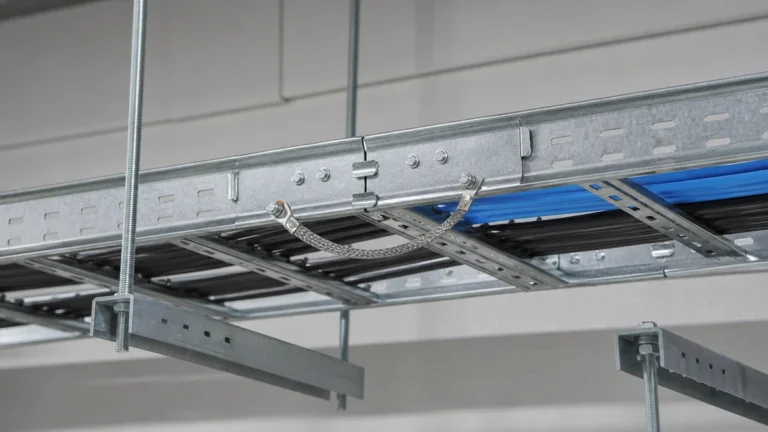
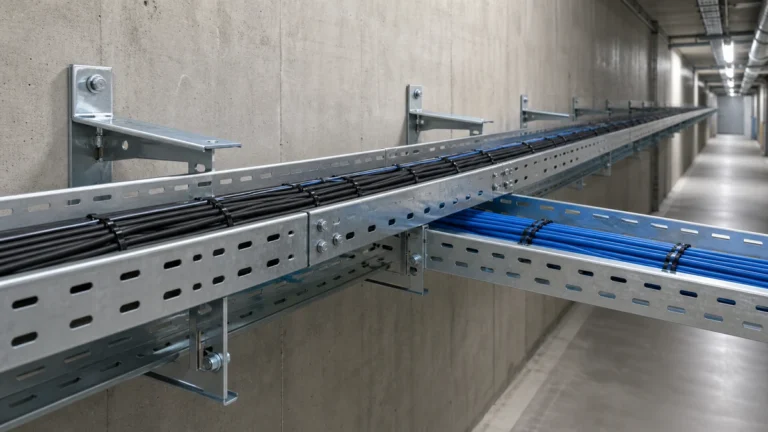
Cable tray expansion joints allow a tray assembly to accommodate movement that may arise from temperature change, long continuous runs, building movement, or a structural expansion location. They are not a generic accessory to be added at a fixed interval…

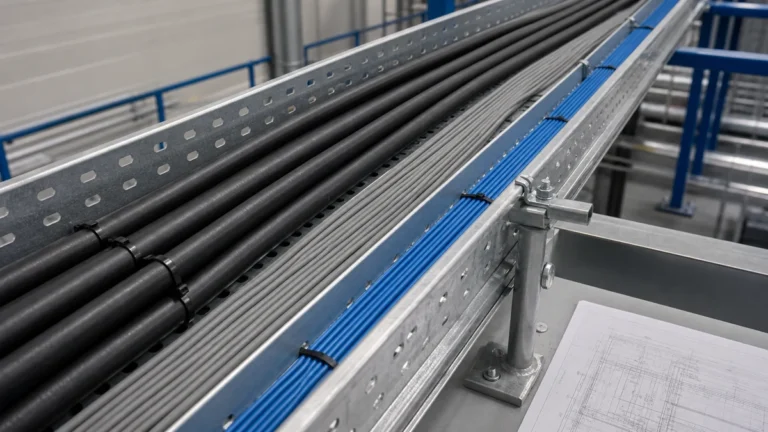
Cable tray influences the environment around installed cables, but it does not determine a cable’s current rating on its own. Heat accumulation, cable grouping density, route geometry, ambient conditions, solar exposure, cover selection, ventilation availability, and the cable manufacturer’s installation…

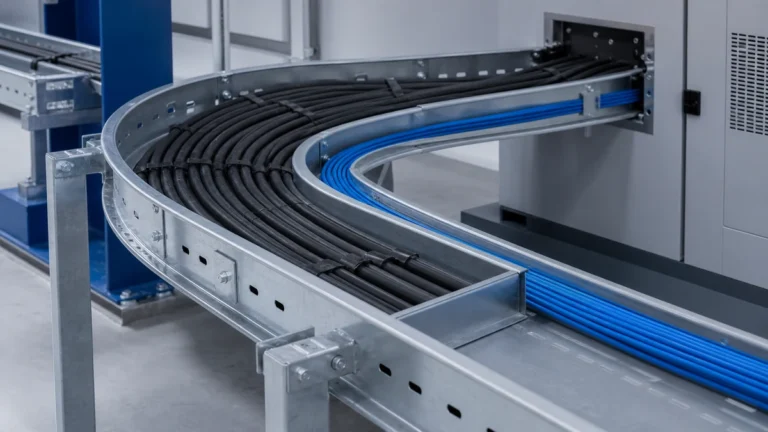
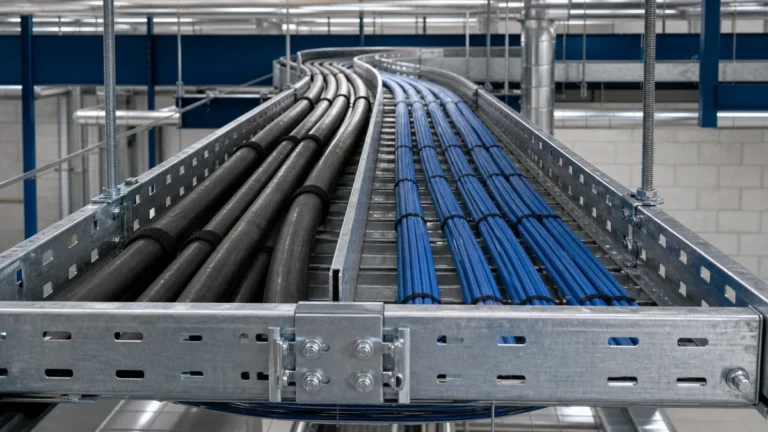
Cable tray bends guide a cable route around a change in direction. They do not, by themselves, establish the minimum bend radius for every cable assigned to that route. Power, control, fiber, and hybrid cables can carry different manufacturer limits…

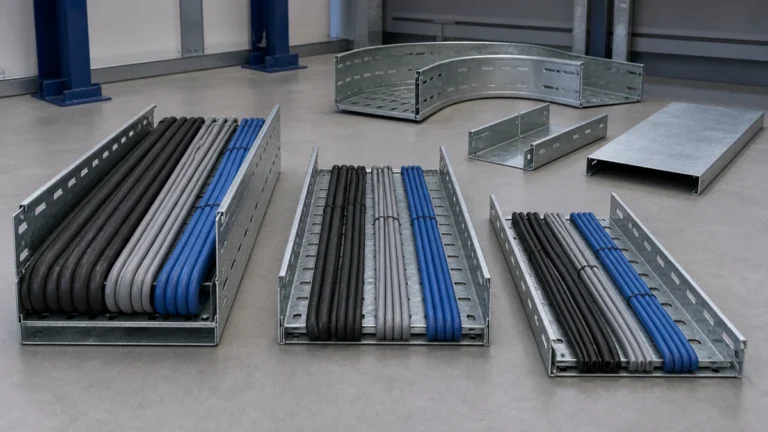
Cable tray depth is the usable sidewall height that retains and organizes the assigned cable assembly. It is frequently summarized as a single capacity number, but that framing is incomplete. The selected depth must work alongside cable outside diameters, permitted…

Cable tray fill ratio is a planning check, not a universal percentage that can be copied from one project to another. It compares the space required by assigned cable groups with the usable tray space, then tests whether the arrangement…

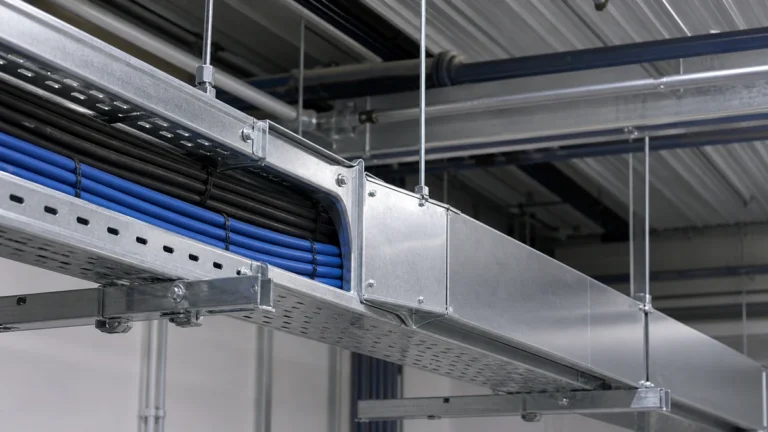
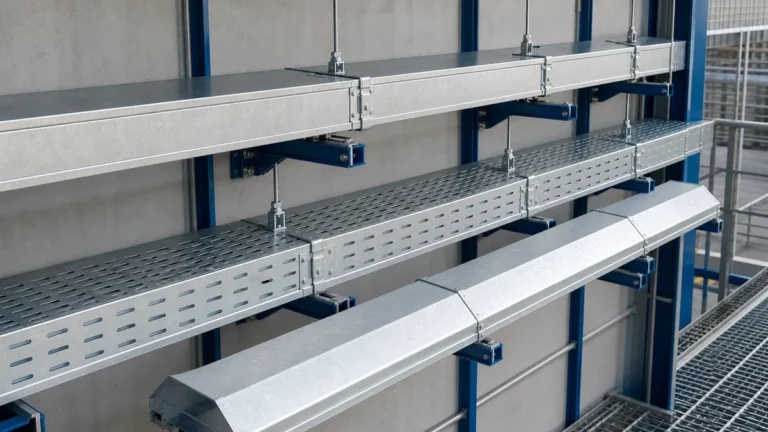
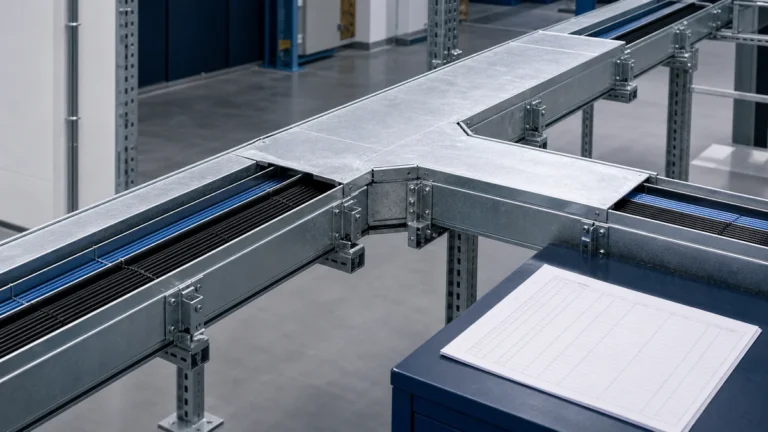
Cable tray covers protect a routed cable system only when their shape, jointing, fixing, material, and maintenance access match the actual route conditions. The practical choices are solid covers, ventilated covers, and peaked covers. Each form addresses a different exposure…

A longitudinal cable tray divider creates defined lanes inside a shared tray run, making intended cable routes visible, repeatable, and inspectable. It is relevant where a single coordinated route must carry power, control, instrumentation, or communications cables and the design…

Light-duty cable tray is a project-defined description applied to a route whose selected system, supports, and cable schedule do not require a heavier arrangement. It is not a universal load class, a fixed capacity rating, or a shortcut applicable to…

Channel cable tray is a narrow cable-support option used where a route carries a limited group of cables and the project needs an organized, accessible path. It appears frequently on instrument, control, communication, and equipment branch routes, but the product…

Trough cable tray is a formed section with a more continuous cable-bearing surface than an open ladder system. It can be appropriate where a route needs a defined channel for smaller or mixed cables while still allowing practical access from…