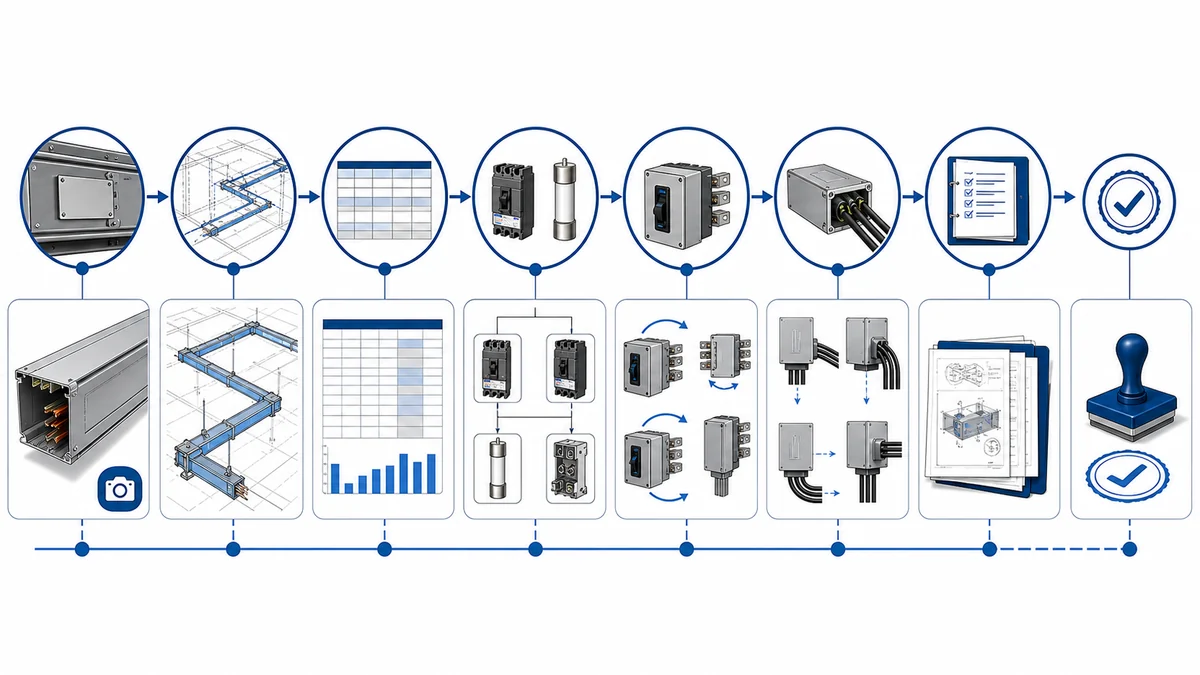
A bus plug is a plug-in tap-off unit that connects to plug-in busway and feeds a downstream load, panel, or piece of equipment. It matters most in factories, data centers, commercial risers, and production areas where load positions may change over time. This guide focuses on bus plug selection, not broad busway definitions: breaker and fusible types, ratings, series compatibility, installation checks, and RFQ data that buyers should confirm before ordering.
What is a bus plug in a busway system?
A bus plug engages a compatible plug-in opening, draws power from the busway, and protects the outgoing branch circuit.
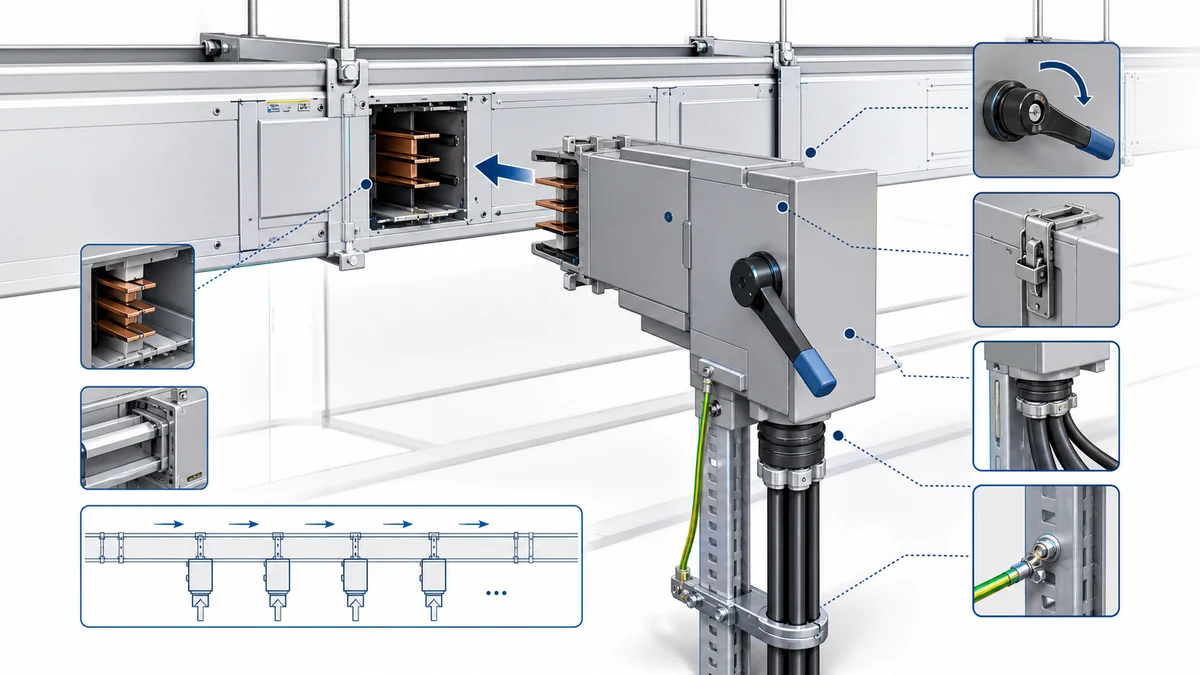
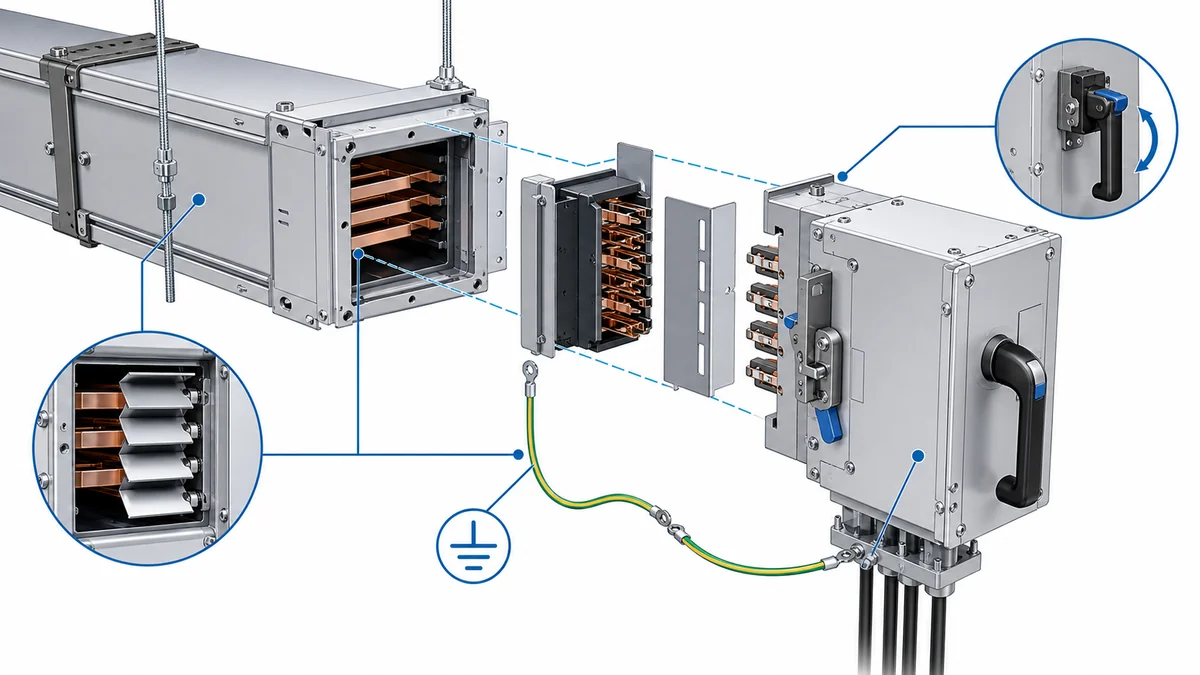
A bus plug is a modular unit that engages a plug-in opening on a busway section. The busway carries power through enclosed conductors, while the bus plug draws power from a selected point and protects the outgoing branch circuit. In project documents, the same device may be called a tap-off unit, plug-in unit, busway plug, or tap-off box.
Bus plugs belong on plug-in busway, where openings are designed for tap-off units. Feeder busway normally moves power from point to point and does not provide the same repeated plug-in access. For that system-level difference, see Xinma’s guide to plug-in busway vs feeder busway.
Most electrical bus plugs contain a molded-case breaker or fuse holder inside a metal enclosure. The device may also include a door interlock, operating handle, cable gland plate, grounding path, labels, and sometimes metering or monitoring parts. The exact construction depends on the busway series and the protection method.
International specifications for busbar trunking often reference IEC 61439-6, which covers busbar trunking systems and tap-off units. Project teams should still verify the edition, local code basis, test evidence, and manufacturer documentation used for the final offer.
Common electrical bus plug types
Breaker bus plugs use a circuit breaker inside the plug enclosure. The breaker acts as the tap-off disconnect and overcurrent device for the downstream circuit. This type is common where maintenance teams want resettable protection and clear local switching at the load point.
Fusible bus plugs use fuses as the overcurrent device. They can fit facilities where the protection study, spare-parts stock, and maintenance practice already depend on fuse coordination. They may carry a lower first cost, but a blown fuse must be replaced with the correct class and rating before the circuit returns to service.
Metered or monitored bus plugs add current sensing, power metering, or a communication module. These units appear in data centers, laboratories, and critical facilities where operators want load visibility by branch circuit without adding separate metering cabinets.
Some specifications use tap-off box as a broad term. That wording can mean a bus plug with an integrated breaker or fuse, but it can also describe a through-type enclosure or a special adapter. Buyers should ask the supplier to state whether overcurrent protection is included, what device is used, and which busway series is approved.
Anonymized experience signal: in a 2025 electronics assembly plant review in East China, three replacement bus plugs were delayed because the buyer requested only “100 A bus plug” without the busway series and frame class. The RFQ was corrected within two working days after the maintenance team added the installed busway model, phase arrangement, cable exit direction, and required breaker type.
Ratings and compatibility checks before ordering
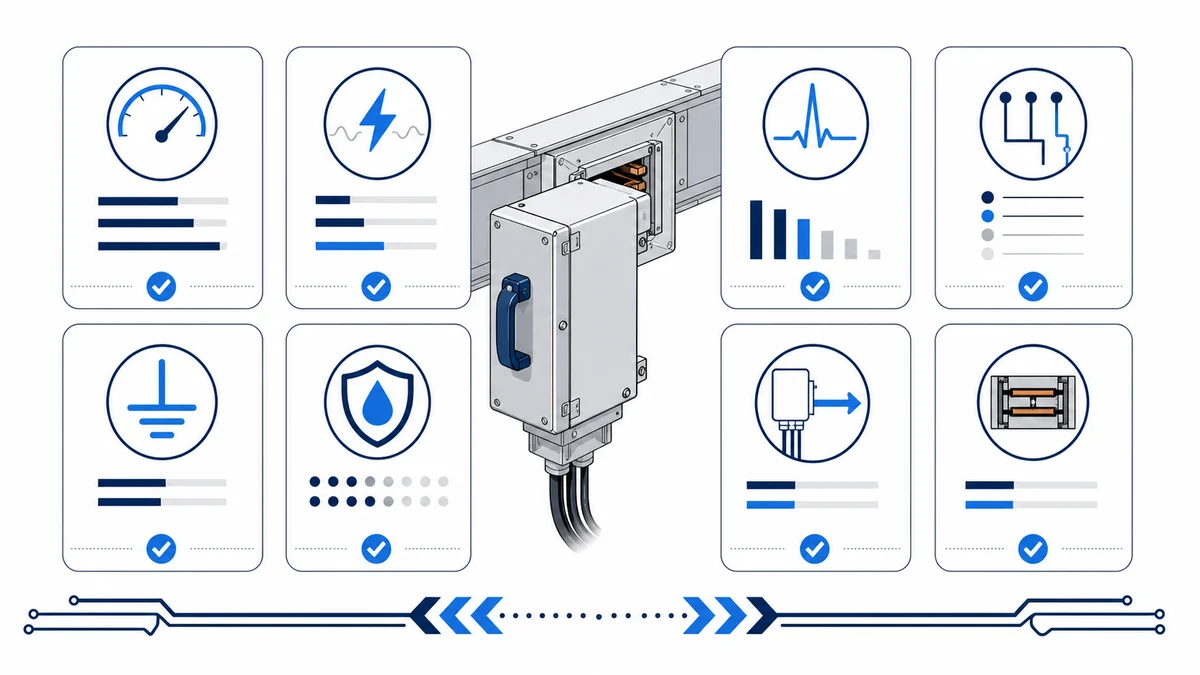
Bus plug selection should verify current, voltage, short-circuit rating, phase arrangement, enclosure, and series compatibility.
Start with the connected load and the busway rating. The bus plug current rating must match the downstream load, but it also has to coordinate with the busway section, upstream protection, and available fault current. Xinma’s busway current rating selection guide covers the busway-level review that should happen before tap-off units are finalized.
Check these items before issuing a purchase order:
Continuous ampere rating. Confirm the breaker or fuse rating and the expected load demand. Do not size a bus plug from equipment nameplate current alone if future load or duty cycle changes are planned.
System voltage. Match the bus plug voltage rating to the busway system voltage and phase configuration. A similar enclosure shape does not make two voltage classes interchangeable.
Short-circuit rating. The bus plug must have a short-circuit current rating suitable for the available fault current at the tap-off point. Use the current coordination study or supplier-confirmed data.
Poles, neutral, and PE. Confirm whether the downstream load needs neutral, and verify the protective earth path through the plug housing and busway ground arrangement.
Series compatibility. Bus plug frames, stabs, shutters, and latch geometry are series-specific. A plug from another brand or series may appear close in size but still lack approval for that busway.
Mechanical fit. Confirm plug-in opening location, mounting orientation, cable exit direction, enclosure rating, operating clearance, and access for later maintenance.
Conservative project example: in a 2024 commercial retrofit in Kuala Lumpur, an anonymized MEP review checked about 70 planned tap-off points before procurement. Five bus plug locations were moved because cable exit direction and ceiling access conflicted with ducts and fire services. The review avoided field modification of plug housings after delivery.
Installation and inspection points that prevent failures
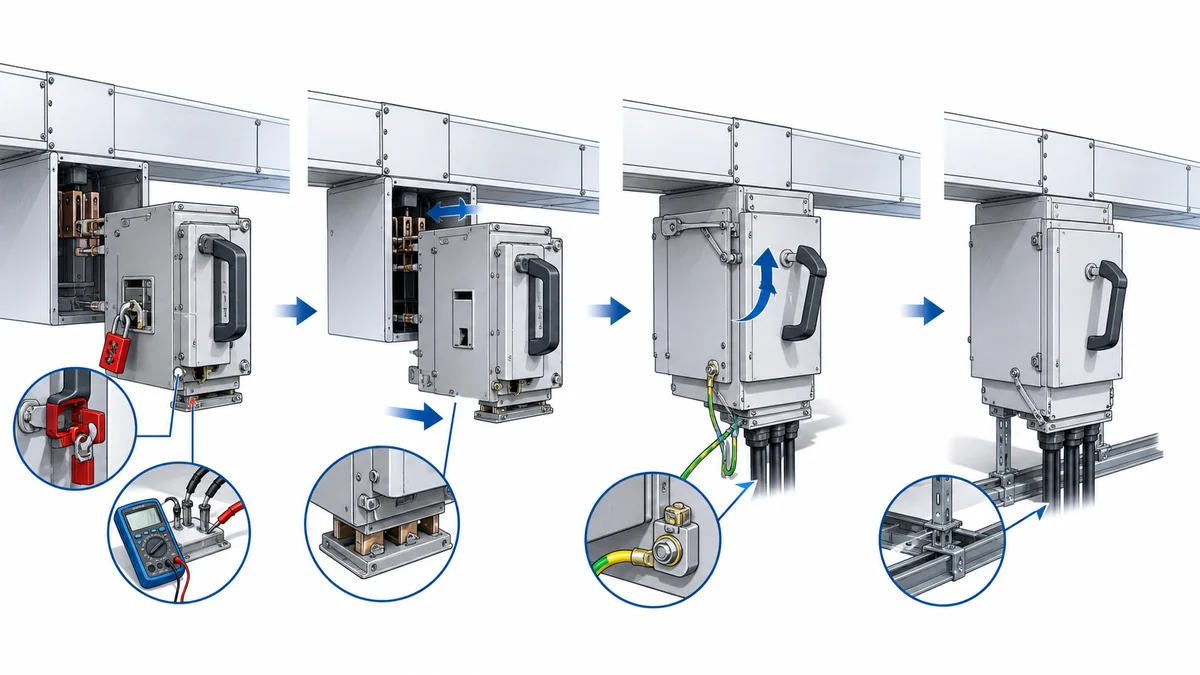
Installation checks should confirm latch engagement, grounding, cable termination torque, interlock operation, labels, and access.
Bus plug installation should follow the manufacturer’s procedure and the site’s lockout policy. The busway installation guide covers route-level checks; the bus plug inspection should focus on the tap-off unit itself.
Before inserting or removing a bus plug, confirm the permitted work method. Do not assume energized installation is allowed because the product is called plug-in. Some systems include shutters and interlocks, but the allowed procedure depends on the busway series, site rules, PPE requirements, and local safety policy.
Inspect the plug body before installation. Check for damaged stabs, cracked insulation parts, missing hardware, bent doors, damaged gaskets, unreadable labels, and any sign of overheating from previous use. A used replacement unit should receive closer inspection than a new factory-packed unit.
After installation, verify latch engagement, ground continuity, cover closure, interlock operation, cable termination torque, phase sequence, and outgoing cable support. Record the bus plug rating, circuit label, location, torque values, and commissioning date. These records matter later when a plant adds load or sources a replacement unit.
Conservative site inspection example: during a 2025 production-line move in an anonymized light manufacturing facility, two bus plugs were found partially latched after relocation. The commissioning team caught the issue before energization, reseated the units, repeated ground continuity checks, and updated the line schedule. The failure mode was installation control, not conductor or enclosure design.
How buyers should specify bus plugs in an RFQ
A complete RFQ should connect installed busway data, load schedule, plug orientation, protection type, and documentation requirements.
A useful RFQ gives the supplier enough information to confirm compatibility before pricing. At minimum, include the busway manufacturer or installed series, system voltage, phase and wire configuration, current rating, short-circuit rating, protection type, breaker frame or fuse class, enclosure requirement, cable exit direction, plug orientation, quantity, and tap-off locations.
For new projects, issue the bus plug schedule with the busway route drawing. Mark each tap-off point with the load name, rating, floor or zone, cable exit direction, and required operating clearance. For retrofit projects, add photos of the installed busway nameplate, plug-in opening, existing plug frame, and clearance around the proposed location.
Ask suppliers to confirm compatibility in writing. Catalog similarity is not enough. Bus plug geometry, stab arrangement, latch design, interlock, and listing basis are tied to the busway series. Written confirmation also helps inspectors and maintenance teams understand why a specific plug family was approved.
For Xinma projects, busway selection should be coordinated with cable tray routes, fittings, accessories, and seismic bracing components where they share the same ceiling or riser space. The practical value is route clearance, support geometry, clamp interfaces, tap-off access, BOM consistency, and easier site inspection. It is not a claim that one product family replaces the others.
Close the RFQ with documentation requirements: drawings, catalog number, wiring diagram, test evidence, installation instruction, labeling method, spare-parts list, and maintenance notes. This keeps the bus plug package traceable after commissioning, especially when replacement units are needed years later.
Frequently Asked Questions
What is the difference between a bus plug and a tap-off unit?
In many projects, the terms describe the same function. A bus plug is a removable unit that connects to a plug-in busway opening and feeds a downstream circuit. Tap-off unit is the broader technical wording, while bus plug is common in North American project language. Always check the supplier’s terminology, because some catalogs use tap-off box for a unit that may or may not include overcurrent protection.
Can any bus plug fit any busway?
No. Bus plugs are usually manufacturer-specific and series-specific. The frame, stabs, shutter, latch, phase arrangement, and enclosure geometry must match the approved busway system. A plug that looks close in size can still be unsafe or non-compliant if it was not tested or listed for that busway series. Ask for written compatibility confirmation before ordering.
Are breaker bus plugs better than fusible bus plugs?
Breaker bus plugs are easier to reset after a trip and may suit facilities with qualified maintenance staff and uptime pressure. Fusible bus plugs can work well where fuse coordination, spare fuse stock, or legacy practice supports them. The better choice depends on the protection study, available fault current, maintenance plan, replacement logistics, and project specification.
What ratings should be checked before buying a bus plug?
Check continuous ampere rating, voltage rating, phase and wire configuration, neutral requirement, protective earth arrangement, short-circuit current rating, breaker frame or fuse class, enclosure/IP rating, cable exit direction, and busway series compatibility. The tap-off unit must coordinate with the connected load, upstream protection, and the available fault current at its installed location.
Can bus plugs be installed while the busway is energized?
Do not assume that energized installation is permitted. Some plug-in busway systems include shutters and interlocks, but the allowed procedure depends on the manufacturer’s instructions, the exact busway series, site safety rules, and local electrical safety requirements. The safest RFQ and installation plan is to require the manufacturer’s written method and the project’s lockout or energized-work approval process.
Kevin Zheng
Kevin Zheng is a manager linked to Shanghai Xinma Busway & Cable Tray Co., Ltd. He writes technical content on cable tray systems, installation practice, sizing logic, load classes, and related standards for industrial and infrastructure applications.