Address
304 North Cardinal St.
Dorchester Center, MA 02124
Work Hours
Monday to Friday: 7AM - 7PM
Weekend: 10AM - 5PM

Address
304 North Cardinal St.
Dorchester Center, MA 02124
Work Hours
Monday to Friday: 7AM - 7PM
Weekend: 10AM - 5PM

Get premium quality cable management systems directly from the manufacturer.
Fill out the form below to receive our catalog and pricing.

Solid-bottom (trough / enclosed) cable trays engineered to protect power and control cables from falling debris, liquid drips, and external impact. Ideal for projects that require clean, fully covered routing with flexible dimensions and material options.
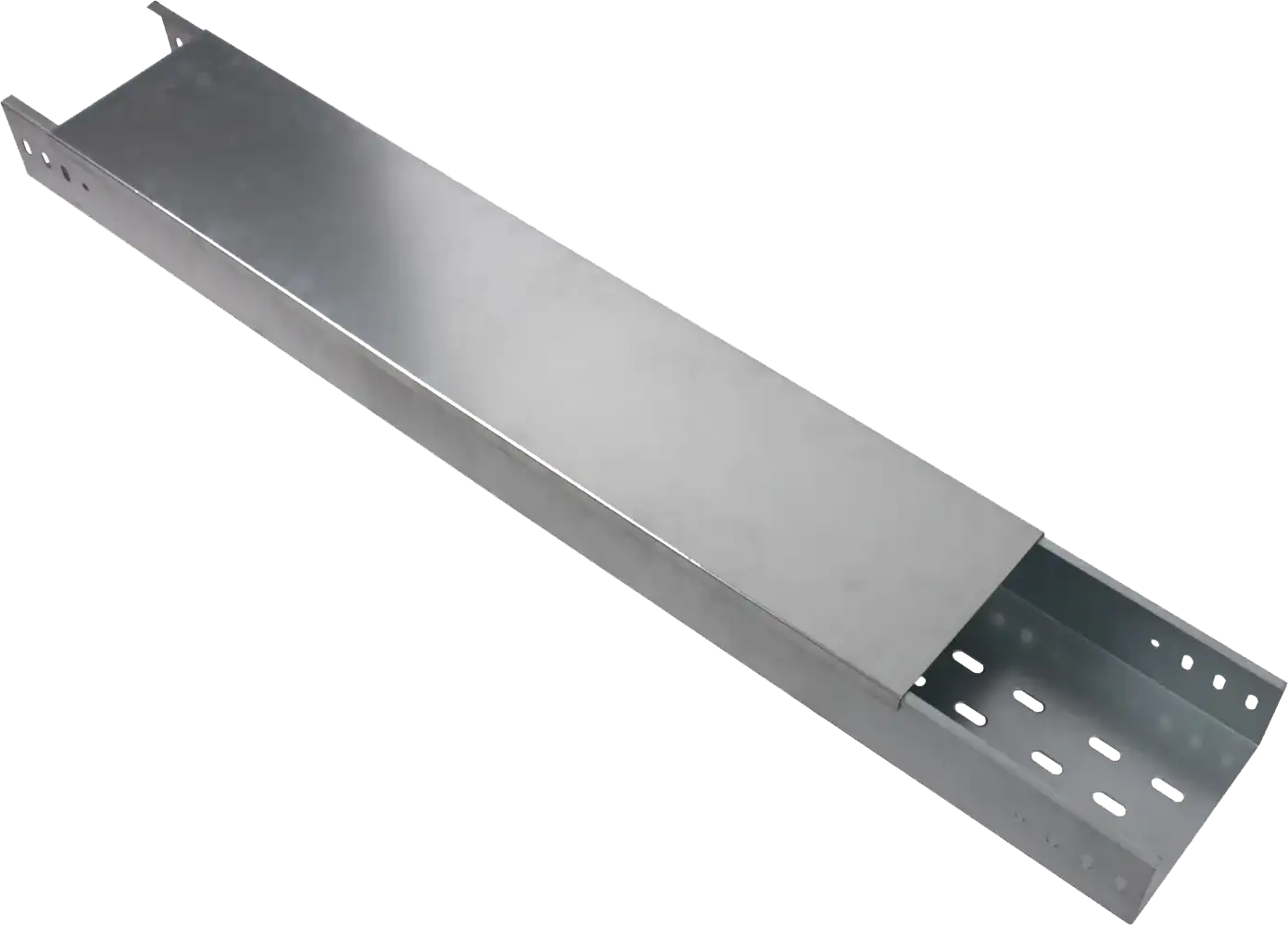
A solid cable tray is a solid-bottom (trough / enclosed) cable support system designed to route and protect power and control cables in environments where debris, drips, or mechanical contact may be present.
Compared with ladder and perforated trays, solid-bottom designs provide more continuous shielding and cleaner routing. They are commonly specified for dusty plants, areas with liquid exposure, and projects requiring cover-ready cable management.
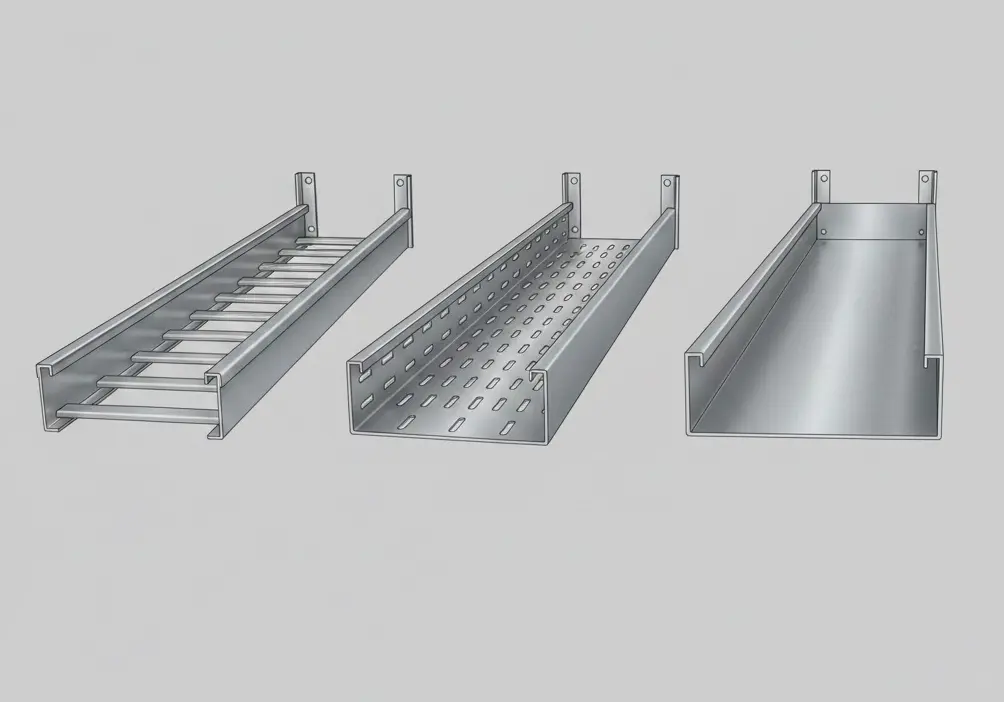
Click any configuration to open the unabridged dimension matrix, ordering logic, and full-scale tables. The modal is optimized with a sticky header and an internal scroll area to prevent overlap with navigation.
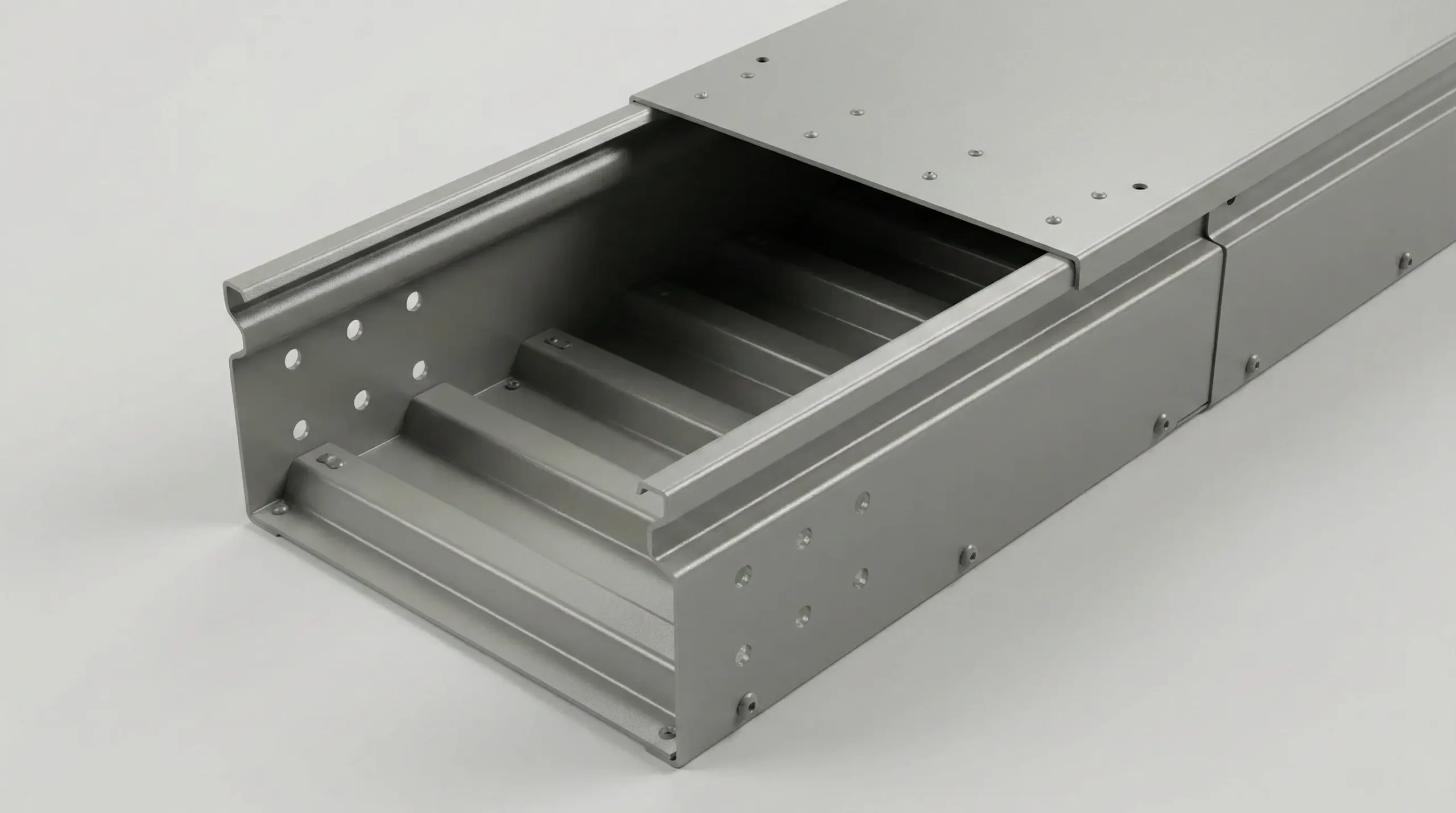
Corrugated solid-bottom structure optimized by FEM for improved inertia moment and loading capacity.
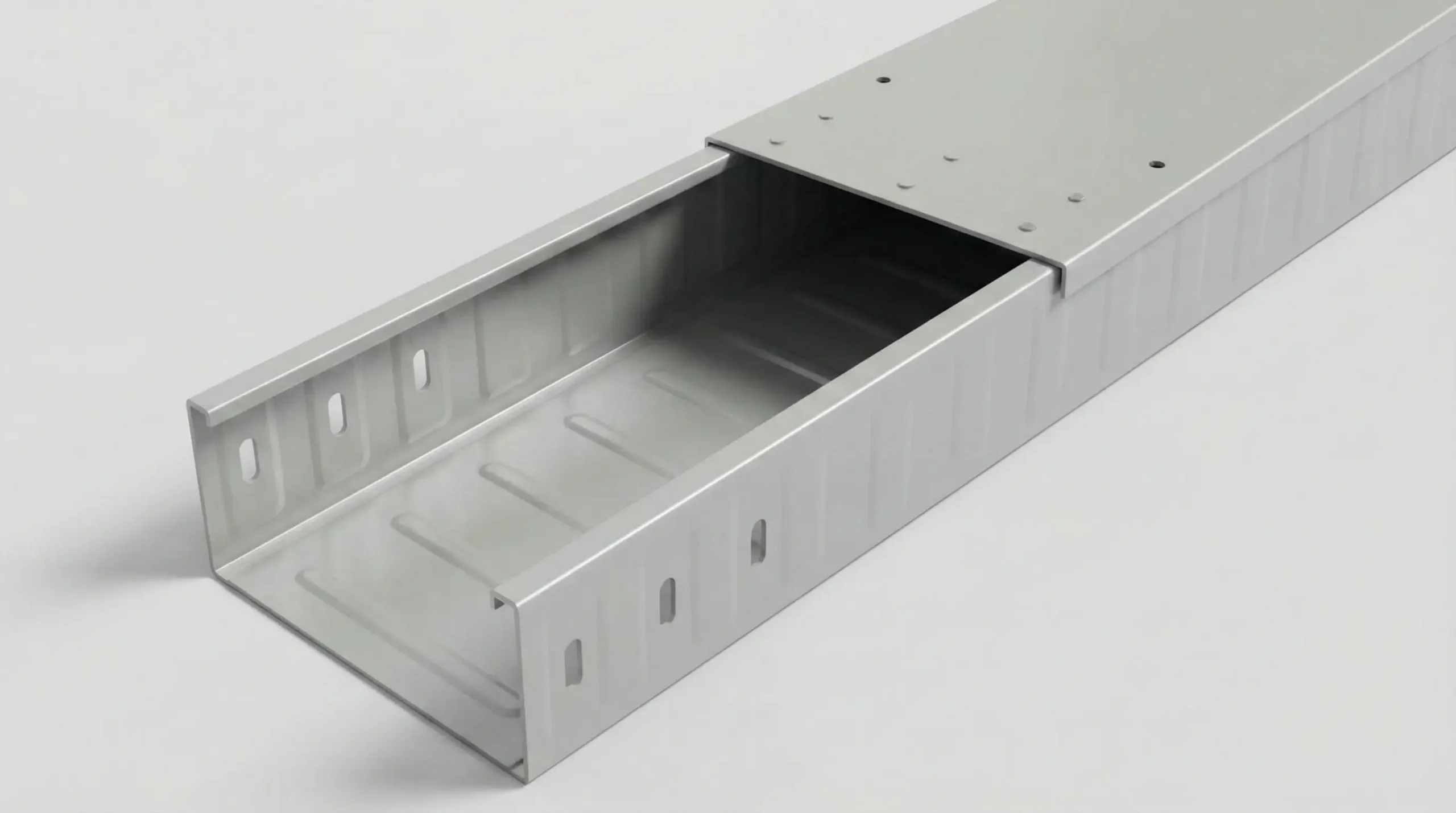
Compact corrugated solid tray for narrow routes and smaller cable bundles. Standard length, customizable.
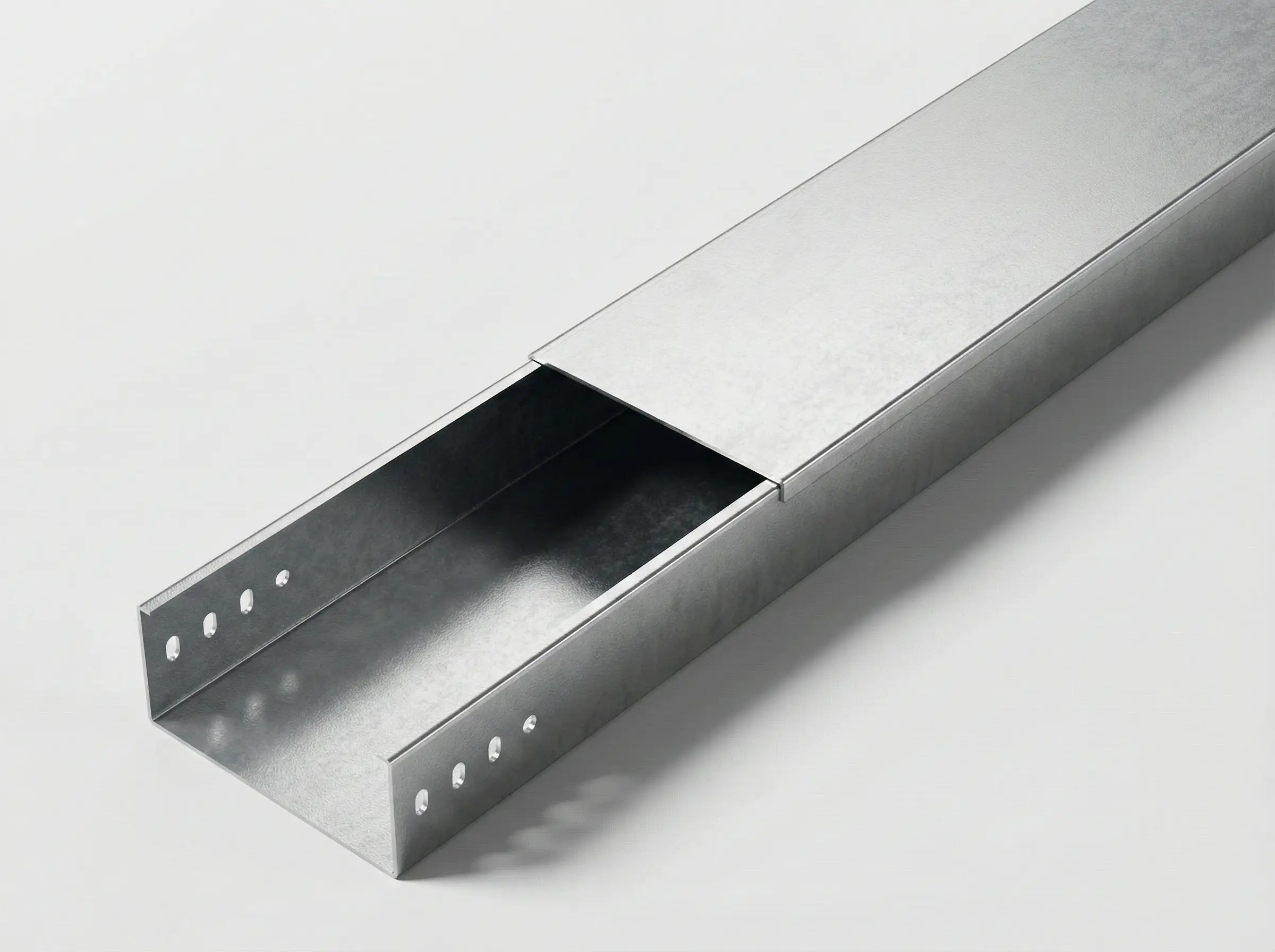
Simple, economical solid-bottom tray with stable performance for wide applications.
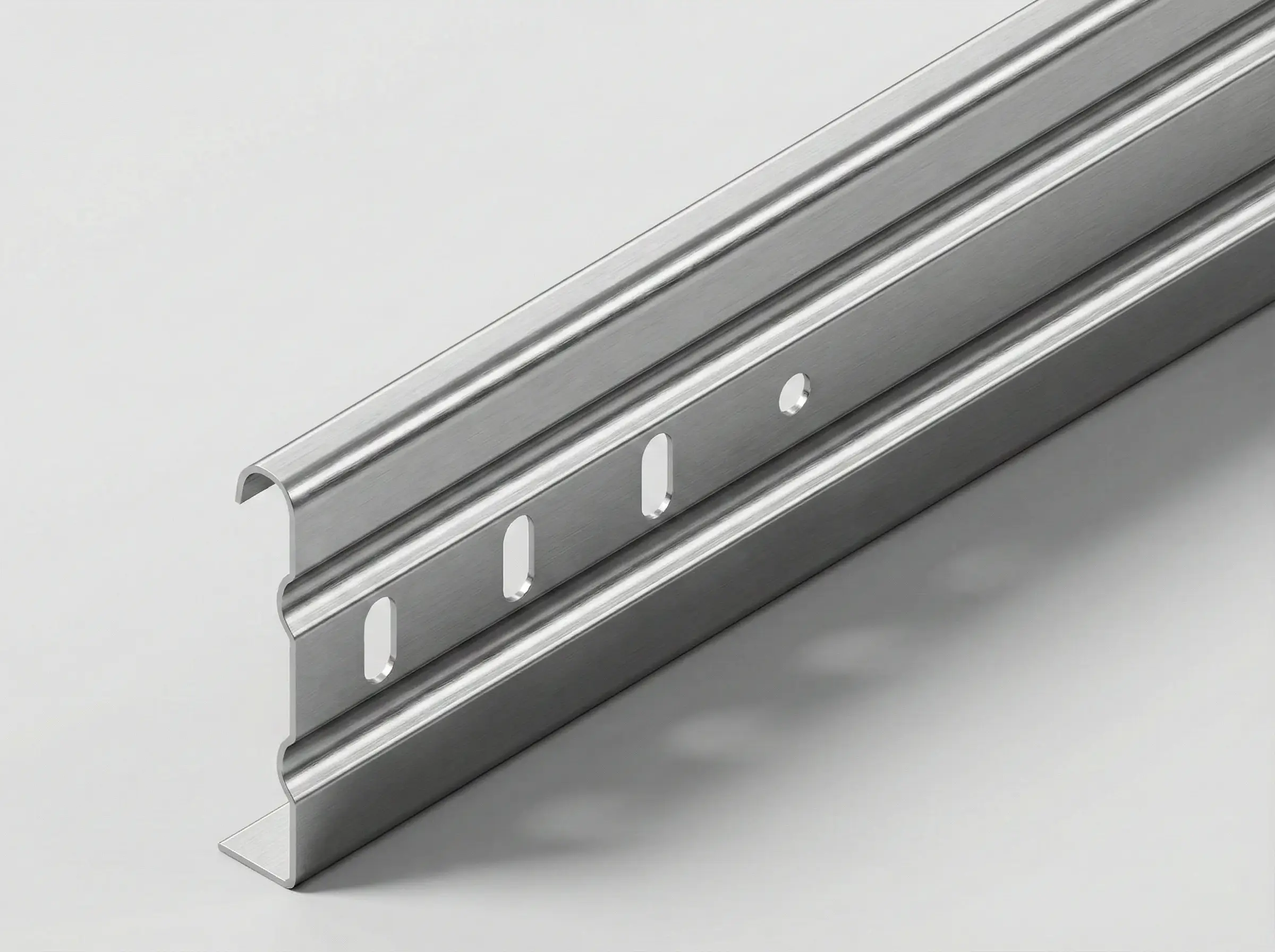
Reinforced sides + corrugated bottom. Designed to reduce installation time and improve stability across spans.
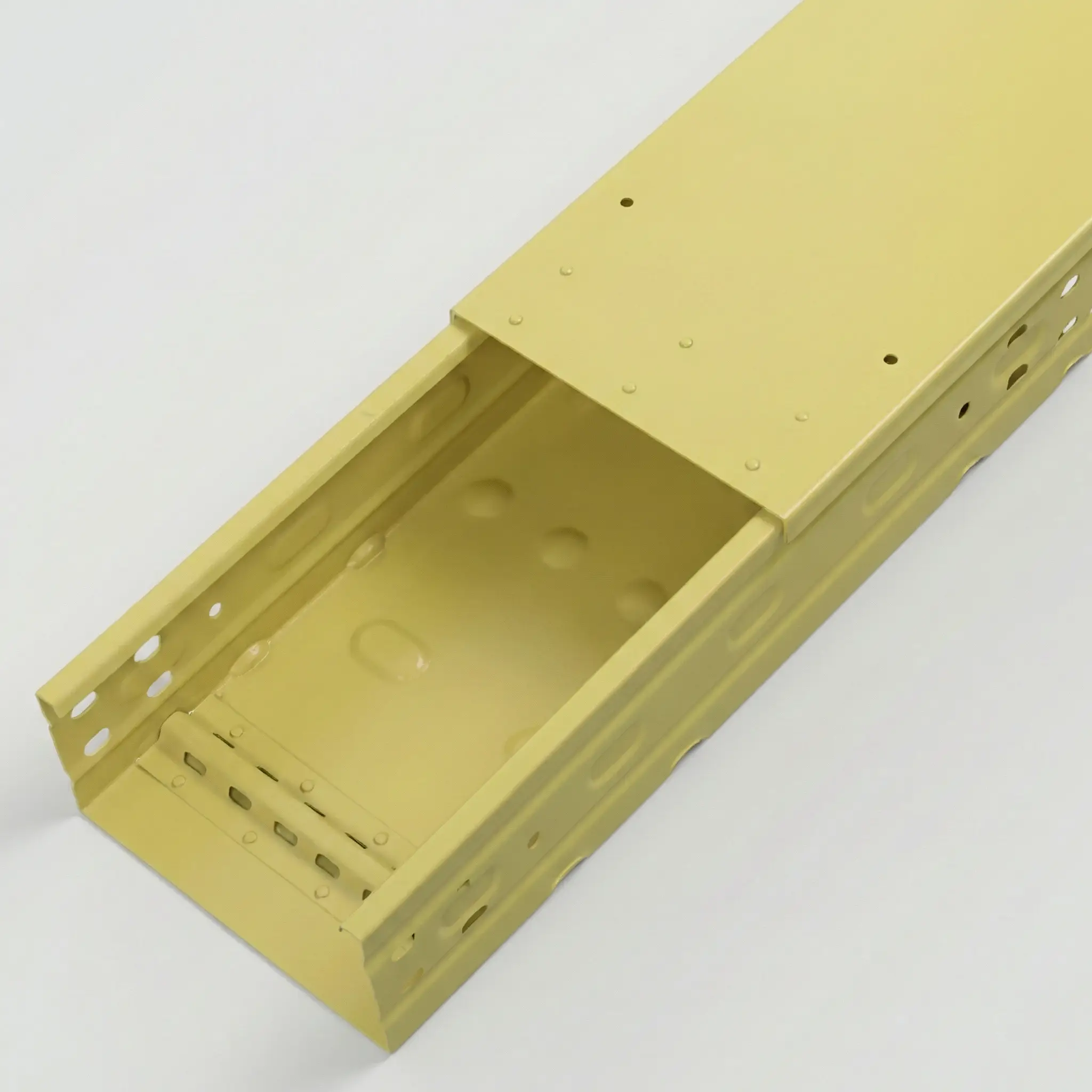
Embossed base plate + reinforced bars for increased strength and material efficiency.
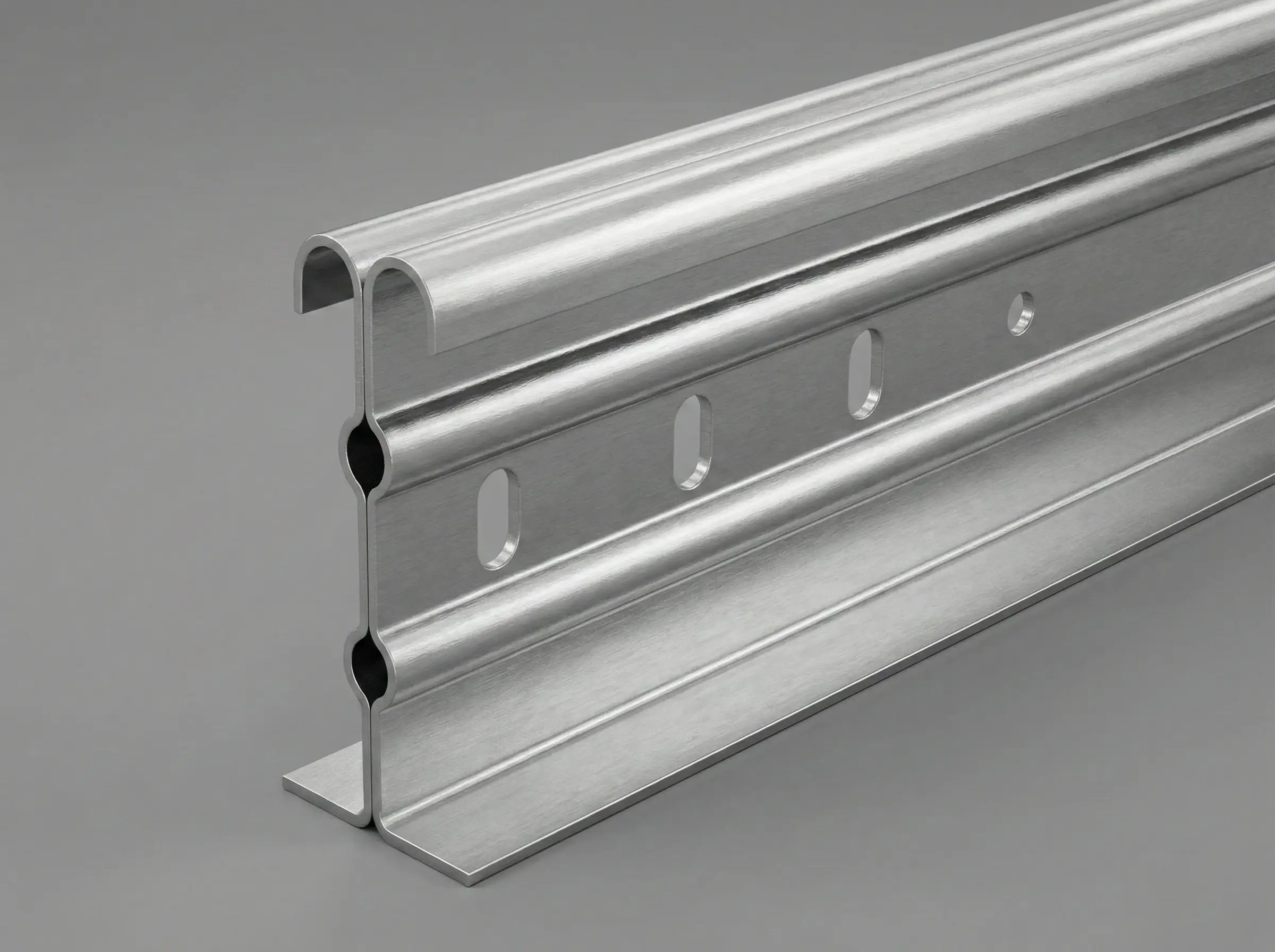
Double reinforced sides to assure strength under long span design, suitable for many straight sections.
* Standards reference: IEC 61537, NEMA VE1, JB/T 10216.
* Lengths shown are standard offerings; customized dimensions and project-specific fabrication are available upon request.
A solid cable tray (trough / enclosed) is specified when cable routes require continuous shielding rather than open ventilation. Choose this structure for dusty production areas, drip-risk zones, and projects that need cover-ready routing with stable support and cleaner cable management.
A solid-bottom surface reduces exposure to falling debris, splashes, and accidental contact. Add covers when you need enclosed routing for cleaner, more protected cable runs.
Selection is based on tray width, side height, and thickness—then matched to support spacing and project loads. Reinforced profiles are available when higher stiffness is required.
Standard covers, bends, tees, reducers, couplers, and supports simplify system assembly. Contractors benefit from predictable layouts and repeatable field installation.
Select pre-galvanized steel, HDG, stainless steel (304/316), or aluminum based on the environment. Finishes can be configured for indoor, outdoor, and corrosive service conditions.
Solid-bottom (trough / enclosed) cable trays are specified where routing requires continuous shielding instead of open ventilation. Typical selection drivers include debris exposure, drip risk, mechanical contact, and the need for cover-ready cable management across industrial and infrastructure projects.
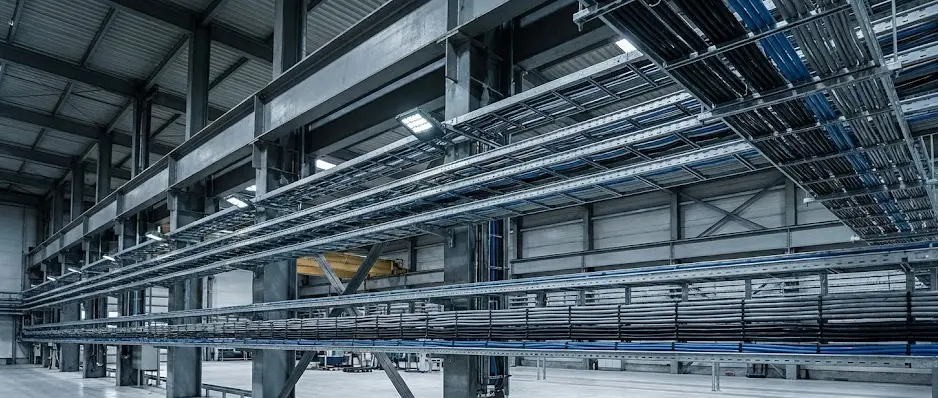
Preferred where dust, debris, or material fallout may enter open trays. Solid-bottom routing helps keep cable paths cleaner and more protected in busy production environments.
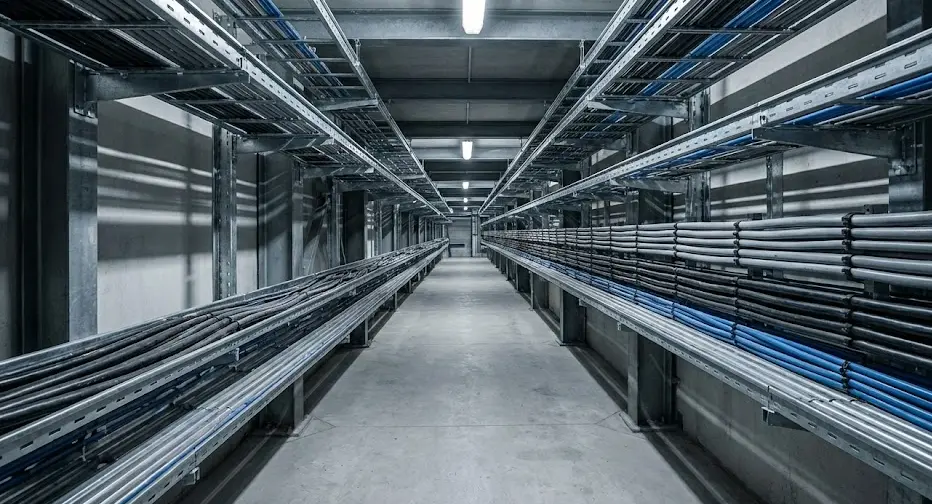
Used for protected routing across long distances. With stable support spacing and optional covers, solid trays maintain cleaner alignment and reduce rework during expansions.
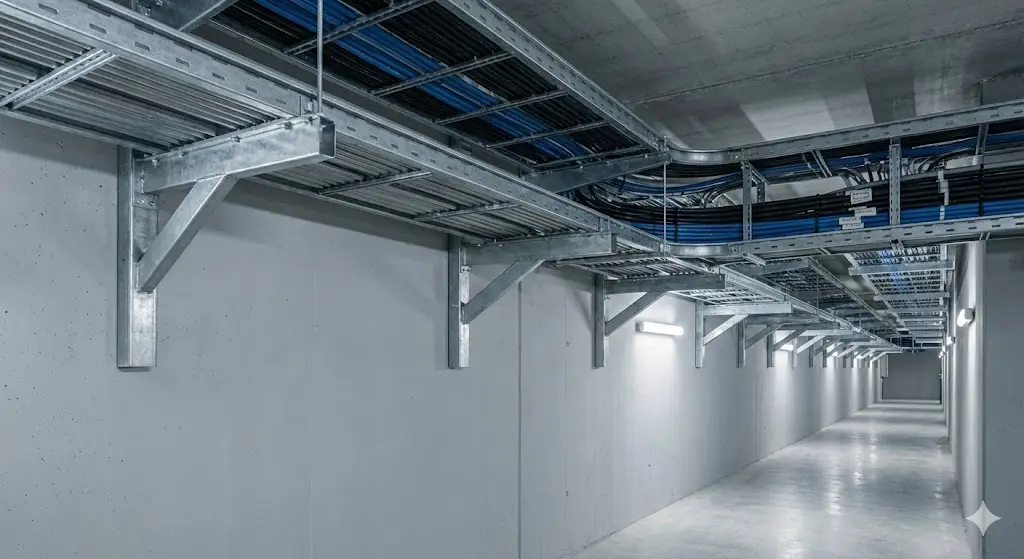
Suitable under piping, HVAC condensate lines, or service zones where drips and splashes may occur. Solid-bottom + covers provide better cable shielding and safer routing control.
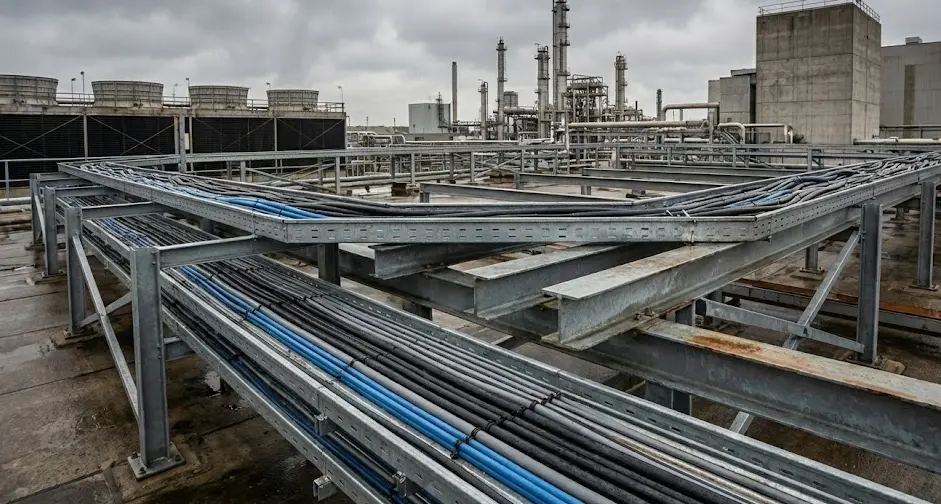
Applied on exposed racks and structures when paired with appropriate materials and finishes. Selection focuses on corrosion control, load, wind/thermal conditions, and cover requirements.
A solid cable tray is typically specified when cables need additional shielding from dust, drip, and impact. In practice, the tray is delivered as a system—straight sections plus covers, joints, dividers, and mounting— so routes stay rigid, serviceable, and safe over time.
Need direction changes and branching parts (tees, risers, crosses)? See Cable Tray Fittings. For covers, clips, dividers, and joining hardware, see Cable Tray Accessories.
Straight covers for dust, drip zones, and general cable protection.
Secure the cover to the tray to prevent vibration and accidental lift-off.
Separate power and control cables and keep routing organized inside solid trays.
High-strength joints to keep long runs rigid and aligned.
Hangers, cantilevers, rails, and fasteners for ceiling, wall, and structure mounting.
Solid cable trays are typically specified where cable protection, cleanliness, or environmental isolation is required. Selection focuses on enclosure level, loading, and finish—then coordinated into a cover-ready system for installation.
To confirm solid-bottom tray configuration, enclosure level, and protection performance, the following inputs are typically reviewed:
Once conditions are confirmed, solid cable trays are supplied as a coordinated, cover-ready routing system:
Share your route layout, installation environment, and target load. We’ll confirm tray width & side height, recommend material and finish, and return a project-ready BOM covering straight sections, routing fittings, and accessories.
Comparing ladder vs perforated vs solid? Start from our system overview: Cable Tray Systems.
For code reference (U.S.), consult NFPA 70 (NEC).